CSU: expect a quiet 2012 Atlantic hurricane season; EF-3 tornado confirmed in Texas
Expect one of the quietest Atlantic hurricane seasons since 1995 this year, say the hurricane forecasting team of Dr. Phil Klotzbach and Dr. Bill Gray of Colorado State University (CSU) in their latest seasonal forecast issued April 4. They call for an Atlantic hurricane season with below-average activity: 10 named storms, 4 hurricanes, and 2 intense hurricanes. An average season has 10 - 11 named storms, 6 hurricanes, and 2 intense hurricanes. The 2012 forecast calls for a below-average chance of a major hurricane hitting the U.S., both along the East Coast (24% chance, 31% chance is average) and the Gulf Coast (24% chance, 30% chance is average). The Caribbean is forecast to have a 34% chance of seeing at least one major hurricane (42% is average.) Four years with similar pre-season March atmospheric and oceanic conditions were selected as "analogue" years that the 2012 hurricane season may resemble: 2009, 2001, 1965, and 1957. These years all had neutral to El Niño conditions during hurricane season. The average activity for these years was 9.5 named storms, 4.8 hurricanes, and 2.3 major hurricanes.
Figure 1. Departure of sea surface temperature (SST) from average for April 5, 2012, as computed by NOAA's NESDIS branch. SSTs in the hurricane Main Development Region (red box) were near average to below-average.
Why the forecast of a quiet season?
The CSU team cited two main reasons why this may be a quieter than average hurricane season:
1) La Niña has weakened rapidly over the tropical Eastern Pacific over the past month, and is expected to be gone by the end of April. In its wake, El Niño conditions may develop in time for the August - September - October peak of hurricane season. If El Niño conditions are present this fall, this will likely bring about a quiet Atlantic hurricane season due to increased upper-level winds over the tropical Atlantic creating wind shear that will tend to tear storms apart. The CSU team is leaning towards putting their trust in the ECMWF model, which is predicting that a weak El Niño event will be in place by fall.
2) Sea surface temperatures (SSTs) in the Main Development Region (MDR) for hurricanes from the Caribbean to the coast of Africa between 10°N and 20°N were near average to below average in March 2012. Virtually all African waves originate in the MDR, and these African waves account for 85% of all Atlantic major hurricanes and 60% of all named storms. When SSTs in the MDR are much above average during hurricane season, a very active season typically results (if there is no El Niño event present.) Conversely, when MDR SSTs are cooler than average, a below-average Atlantic hurricane season is more likely. This year's SSTs in the MDR are among the coolest we've seen since our current active hurricane period began in 1995. The cool temperatures are largely due to strong surface winds that blew during the winter over the tropical Atlantic in response to the positive phase of the North Atlantic Oscillation (NAO.) The strong winds stirred up the water, bringing up cooler waters from the depths.
How good are the April forecasts?
The forecasters are using a new statistical model developed last year for making April forecasts, so we don't have a long enough track record to judge how good the new model is. The new model correctly predicted a more active than average season for last year, though called for more activity than was actually observed. However, April forecasts of hurricane season activity are low-skill, since they must deal with the so-called "predictability barrier." April is the time of year when the El Niño/La Niña phenomenon commonly undergoes a rapid change from one state to another, making it difficult to predict whether we will have El Niño, La Niña, or neutral conditions in place for the coming hurricane season. Correctly predicting this is key, since if El Niño, conditions are present this fall, this will likely bring about a quiet Atlantic hurricane season due to increased upper-level winds over the tropical Atlantic creating wind shear that will tend to tear storms apart.
CSU maintains an Excel spreadsheet of their forecast errors ( expressed as a mathematical correlation coefficient, where positive means a skilled forecast, and negative means they did worse than climatology) for their their April forecasts. For now, these April forecasts should simply be viewed as an interesting research effort that has the potential to make skillful forecasts. The next CSU forecast, due by June 1, is the one worth paying attention to. Their early June forecasts have shown considerable skill over the years.
Preliminary NWS survey of the April 3rd, 2012 Dallas, Texas tornadoes
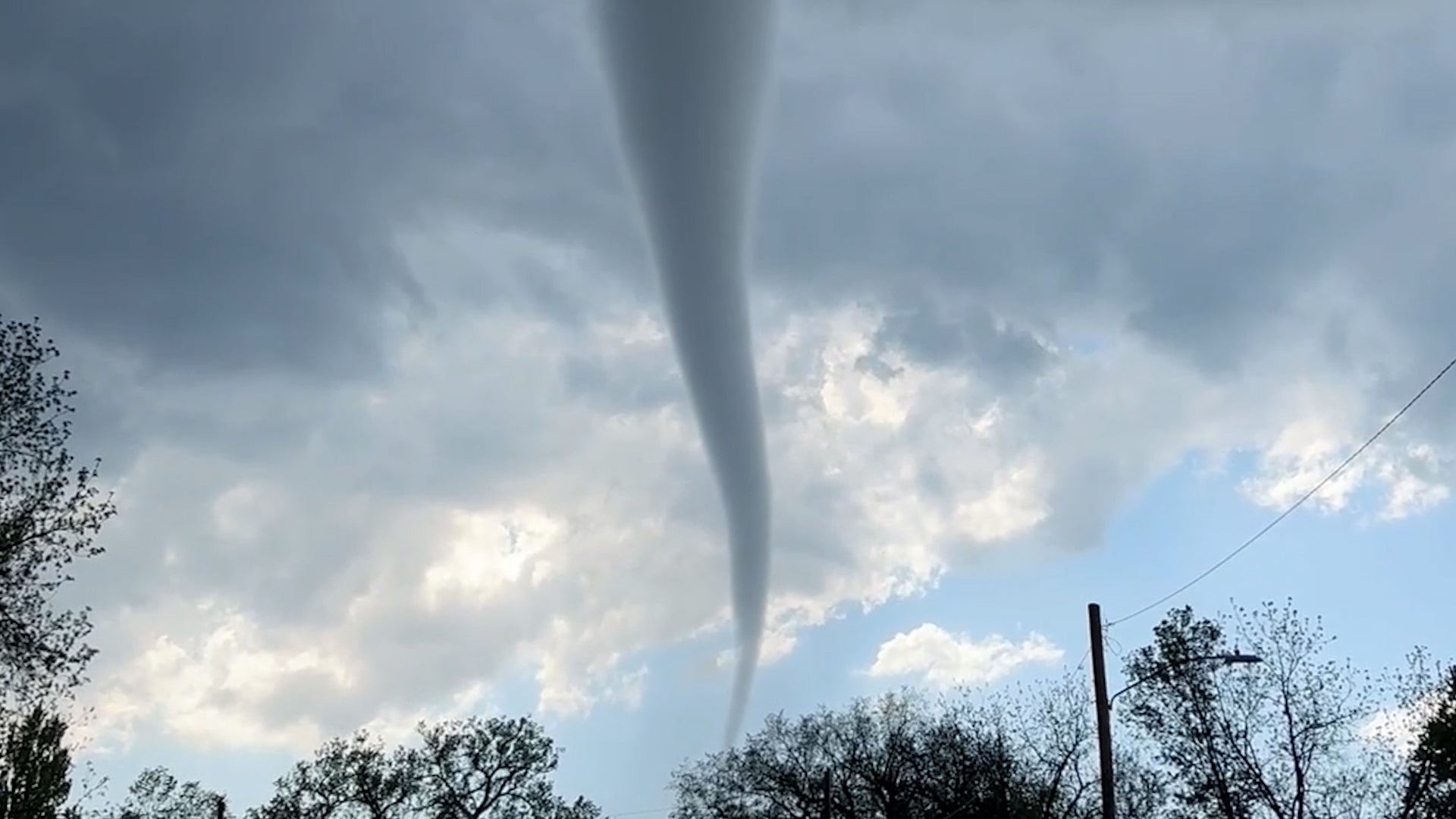
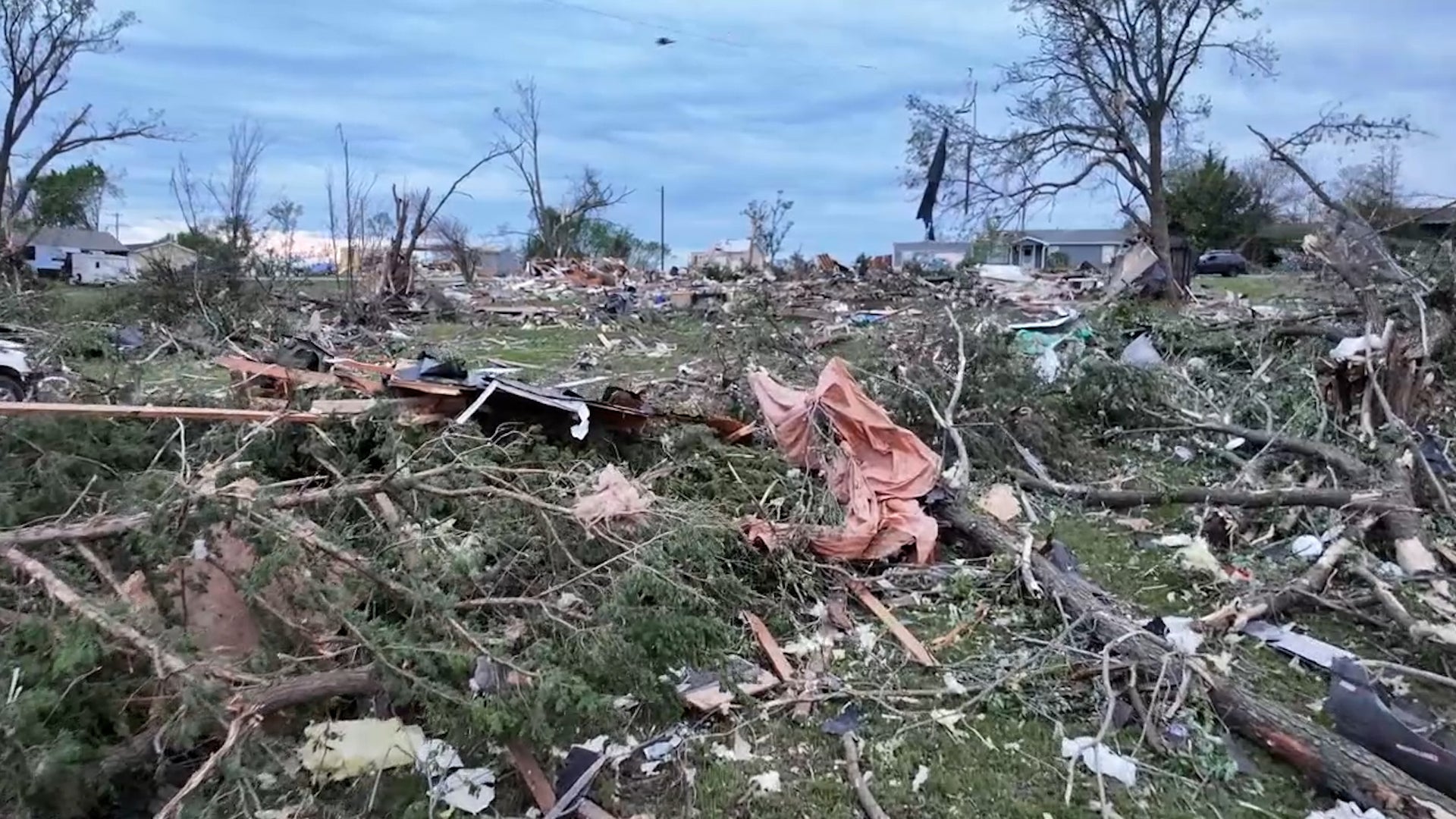
The Fort Worth Weather Service office began surveying tornado damage yesterday from three tornadoes that ripped through the Dallas metro area on Tuesday afternoon. Official storm surveys will be released in the next few days. The Arlington/Kennendale tornado has a preliminary rating of EF-2. They suspect wind speeds peaked around 135mph, a path length of 4.6 miles, and a maximum width of 400 yards (1/4 mile). The Lancaster/Hutchins tornado has a preliminary rating of EF-2, and they suspect it had a maximum width of 200 yards (1/8 mile). The Forney tornado has a preliminary rating of EF-3, with suspected winds up to 150 mph. Surveys are ongoing--there's a lot of damage to see along the tornado paths. These ratings reflect the most severe damage the teams have seen so far. Eighteen tornado warnings were issued by the National Weather Service in Fort Worth on Tuesday, which saved hundreds of lives. There were no fatalities Tuesday, which is welcome news in the wake of 2011's deadly tornado season.

Figure 2. This photo was taken by a NWS Storm Survey team in Lancaster TX on April 4, 2012. It shows EF-2 tornado damage that occurred in parts of Lancaster on April 3, 2012.

Figure 3. From the Weather Service: This is an aerial photograph of a tornado damaged area in Arlington TX. The damage from the tornado that affected Kennedale and Arlington on April 3, 2012 has been given a preliminary rating of EF-2. The photo was taken on Wednesday, April 4, looking to the east.
Portlight disaster relief charity responds to this year's tornadoes
Disaster relief charity portlight.org sent Thomas Hudson to the DFW area yesterday to do damage assessment and determine whether there is a need for Portlight's services in the wake of the tornadoes. Check out the Portlight blog to see the latest updates, and catch up the great work they've been doing in Harrisburg, Illinois in the wake of the devastating EF-4 tornado that hit the town on Leap Day, 2012.
Jeff Masters
Reader Comments
Page: 1 | 2 | 3 | 4 | 5 | 6 | 7 | 8 | 9 | 10 | 11 | 12 | 13 | 14 | 15 | 16 | 17 | 18 | 19 | 20 | 21 | 22 | 23 | 24 | 25 | 26 — Blog Index
NATIONAL WEATHER SERVICE MELBOURNE FL
1030 AM EDT THU APR 5 2012
.DISCUSSION...
...STRONG TO SEVERE STORMS POSSIBLE...MAINLY OVERNIGHT...
CURRENT...DYING MCS OFFSHORE SE FLORIDA WITH CLOUDS RAPIDLY THINNING
OVER ECFL. DELAYED HEATING COUPLED WILL RESIDUAL POST-MCS SUBSIDENCE
WILL KEEP WX MAINLY DRY MOST OF THE AFTERNOON AND ALLOW TEMPS TO
RECOVER PRETTY RAPIDLY WITH ALL AREAS HITTING 90F/LOWER. 10Z KXMR
RAOB AND LOCAL GPS DATA SHOWS MUCH HIGHER MEAN PWAT THROUGH STILL
A PRONOUNCED DRY SLUG IN THE H975-H850 LAYER. EXPECT ONLY SMALL
CHANCE FOR STORMS ALONG DIFFUSE WCSB AND LAKE BREEZE INTERACTIONS...
SIMILAR TO WED. VERY FEW (IF ANY) DIURNAL CELLS...BUT ANY COULD BECOME
STRONG GIVEN THE COLD TEMPS ALOFT (-11 TO -12C).
LATER TODAY/TONIGHT...CONTINUED INCREASING MEAN PWAT ALONG WITH
STRENGTHENING MEAN WIND FIELDS...ALBEIT MOSTLY UNIDIRECTIONAL. LOCAL
AIR MASS LOOKS A LITTLE MORE FAVORABLE FOR MAINTAINING MCS AND
ATTENDANT STORMS WHICH WILL APPROACH NWRN CWA TOWARD SUNSET (GIVE OR
TAKE 1-2HRS). BUMPED POPS FOR TODAY ACROSS THE FAR NW IN THE EVENT
THAT THE UPSTREAM MCS ACCELERATES AND REACHED THE FAR NW CWA AN HOUR
OR TWO BEFORE 00Z (6-8PM). NUDGED TEMPS UP ALON THE COAST GIVEN THE
EXPECTED INCREASE IN WSW FLOW. ALSO PLAN TO BEEF UP POPS FOR TONIGHT
ACROSS THE NRN/CTRL COUNTIES...AND LATE MORNING HWO WILL HIT SVR WX
POTENTIAL A LITTLE HARDER.
AFTERNOON PACKAGE WILL BE ABLE TO REFINE/ADJUST TIMING A LITTLE
BETTER
1) La Niña has weakened rapidly over the tropical Eastern Pacific over the past month, and is expected to be gone by the end of April. In its wake, El Niño conditions may develop in time for the August - September - October peak of hurricane season. If El Niño conditions are present this fall, this will likely bring about a quiet Atlantic hurricane season due to increased upper-level winds over the tropical Atlantic creating wind shear that will tend to tear storms apart. The CSU team is leaning towards putting their trust in the ECMWF model, which is predicting that a weak El Niño event will be in place by fall.
bow echo 70 mph winds possible, expected to strengthen with daytime heating:
With changes in the ENSO status, the atmosphere and ocean rarely react at the same pace. Sometimes the atmosphere shows the first changes, and other times the ocean shows the first changes. The last transition we had, the ocean led the changes, with the atmosphere following. Bearing in mind the impacts of El Nino in the Houston area (for example), has any thought been put into the idea that this time, the atmosphere may be trying to lead the transition?
I mention this since El Nino tends to make the winter wet, while La Nina provides for a much drier winter. As this winter was rather wet (yay!), maybe El Nino is the cause, with the atmosphere leading for once?
Of course, this idea breaks down a bit when you look at FL (who is going into a drought), and Puerto Rico (who is getting drowned - more typical of La Nina).
Any thoughts?
Link
2001
If we get another Allison here in Houston, that will be a major flood problem
I agree with you and I've even mentioned this on here before as well as others like Doc-N-Swamp.
Last summer was scary, RitaEvac. I do not wish to see a repeat of that again. Last year I had to water the Pecan trees enough to make sure they survived. I am glad we have caught some good rains and they are doing very well now. ... Speaking of which, my trees burst out into leafing on March 29 this year. I do not recall them ever leafing out before the end of April to the first week of May before now. What do you know about the "normal" leafing time for Pecan trees in this area?
Dissipated September 19, 2001
Highest winds 1-minute sustained:
80 mph (130 km/h)
Lowest pressure 975 mbar (hPa); 28.79 inHg
Fatalities 2 direct, 1 indirect
Damage $230 million (2001 USD)
Areas affected Florida, Newfoundland..By September 5, a weak low- to mid-level trough was nearly stationary a short distance off the southeastern coastline of the United States. It remained stationary for several days,[1] and on September 11 a low-level circulation developed about 125 miles (201 km) south-southeast of Charleston. With minimal associated convection,[2] the system degenerated into an open trough as it drifted southwestward due to weak steering currents.[3] The broad feature extending from the Bahamas to the eastern Gulf of Mexico gradually developed a mid-level center by September 9 over Florida.[1] A surface low pressure area developed on September 10 over the eastern Gulf of Mexico,[4] and despite disorganized convection conditions favored further development.[5] The low gradually became better organized,[6] and by the time of the September 11, 2001 attacks, the low was well-organized enough with sufficiently organized convection for the National Hurricane Center to classify it as Tropical Depression Eight[7] while located about 170 miles (270 km) west-northwest of Key West, Florida.[1]
WIKI..
Located in an environment of weak steering currents, the depression drifted to the west-southwest. Northerly wind shear and the presence of an upper-level low near the system initially prevented further organization, leaving the center of the depression poorly defined with minimal convection. The depression gradually became better organized as it slowly executed a small counter-clockwise loop, and early on September 12 the system developed increased banding features over the eastern half of its circulation. By early on September 13 the upper level outflow over the depression became much more conducive for intensification, though at the surface the circulation initially remained very broad with light winds around the center. Shortly thereafter, deep convection developed and persisted near the center, and at 1200 UTC on September 13 the depression intensified into Tropical Storm Gabrielle while located about 200 miles (320 km) southwest of Venice, Florida. Under the influence of a mid-level trough, the storm accelerated northeastward and quickly intensified despite increasing amounts of westerly wind shear. Its center reformed several times under the deep convection, and on September Gabrielle made landfall near Venice, Florida with winds of 70 mph (110 km/h). At the time, Hurricane Hunters reported gusts to hurricane force, and the National Hurricane Center indicated the possibility that Gabrielle made landfall as a hurricane.
The weather is going down hill here on the North Carolina Coast.
Overcast with the wind off the ocean at 19 kts. with guests to 22 Kts.
Forecast is for Gale conditions on Good Friday !
I just hope we have a mild season this year.. between the quakes and the tornadoes the insurance companies have enough to deal with..
By Yuka Hayashi
Of THE WALL STREET JOURNAL
TOKYO (Dow Jones)--Water containing radioactive substances may have leaked into the ocean from the Fukushima Daiichi nuclear plant, the plant operator said Thursday, the latest example of continued problems at the stricken plant more than three months after the government declared conditions there stabilized.
The leakage occurred at a pipeline carrying concentrated radioactive water from a desalination device to a storage tank early Thursday, plant operator Tokyo Electric Power Co. (9501.TO) said in a press release. The leak was contained after 30 minutes when valves were closed.
The company estimates roughly 12 tons of contaminated water may have escaped into the ocean. High levels of cesium 134 and 137 were confirmed at the point of the leak roughly 300 meters from the ocean, but no detectable amounts of radioactive contamination have been found in the sea water.
The company will further investigate the possible spread of contamination and its potential impact in the ocean, including the existence of beta radiation that could contain harmful strontium, company spokesman Yoshikazu Nagai said.
The amount of water reportedly released was tiny compared with the amount Tepco dumped into the ocean during the early weeks of the accident. Alarming neighboring countries, the Japanese government approved in April last year the discharge of 10,000 tons of low-level radioactive water from the plant as Tepco ran out of space to store water accumulating as a result of desperate efforts to cool the reactors.
Thursday's leak came on the heels of several other problems at the plant.
In late March, Tepco said readings of airborne radiation inside the containment vessel at the No. 2 reactor had surged to a deadly 79 sieverts, the highest level since the crisis began March 11 last year. That came alongside news that the volume of the reactor's cooling water had declined sharply.
A leakage incident near the desalination facility similar to Thursday's was also reported March 26.
Such problems have cast doubts about the plant's stability long after the government declared in late December the reactors had been brought under control.
-By Yuka Hayashi, The Wall Street Journal; +81-3-6269-2832; yuka.hayashi@wsj.com
And that tail end of front in Caribbean may be a trigger for early development,if conditions are right.
If we get a TS Allison situation almost anywhere it would be a major flood problem.
April, the tassels are out with leaves
Technically the official forecast wasn't that it would stay dry. The official forecast was for the most-likely precipitation condition to be below average.
Any CPC forecast that doesn't show at least a 50% delineation is not really saying that the likely answer is one or the other, it would just be a plurality. Those forecasts are based on based ENSO conditions which are not always the same either. The majority of past La Ninas may have been drier-than-average in east Texas, but I'm sure you'll find exceptions. Seasonal forecasts like this - regardless of the source - don't have particularly high skill and need to be treated as a statistical plurality/most-likely instead of as specific forecasts.
57 more days til June 1st.
Good morning Jax82....I didn't notice that I had the same avatar as you.
You could be right, but I'm just going to wait and see what happen
Good to know LargoFl...same to you!
NATIONAL WEATHER SERVICE JACKSONVILLE FL
952 AM EDT THU APR 5 2012
ATLANTIC COASTAL WATERS FROM ALTAMAHA SOUND GA TO FLAGLER BEACH FL
OUT TO 60 NM
AMZ470-472-474-052200-
ALTAMAHA SOUND GA TO FERNANDINA BEACH FL 20 NM TO 60 NM OFFSHORE-
FERNANDINA BEACH TO ST AUGUSTINE FL 20 NM TO 60 NM OFFSHORE-
ST AUGUSTINE TO FLAGLER BEACH FL 20 NM TO 60 NM OFFSHORE-
952 AM EDT THU APR 5 2012
...SMALL CRAFT ADVISORY IN EFFECT FROM FRIDAY MORNING THROUGH
FRIDAY EVENING...
...GALE WATCH IN EFFECT FROM FRIDAY EVENING THROUGH LATE FRIDAY
NIGHT...
...SMALL CRAFT ADVISORY IN EFFECT FROM LATE FRIDAY NIGHT THROUGH
SUNDAY MORNING...
.REST OF TODAY...SOUTHWEST WINDS 15 KNOTS BECOMING SOUTH
10 TO 15 KNOTS LATE IN THE AFTERNOON. SEAS 2 TO 4 FEET. ISOLATED
SHOWERS AND THUNDERSTORMS IN THE AFTERNOON.
.TONIGHT...SOUTHWEST WINDS 15 KNOTS. SEAS 2 TO 4 FEET. SCATTERED
SHOWERS AND THUNDERSTORMS.
.FRIDAY...NORTH WINDS 20 TO 25 KNOTS. SEAS 3 TO 5 FEET BUILDING
TO 5 TO 7 FEET IN THE AFTERNOON. SCATTERED SHOWERS AND
THUNDERSTORMS IN THE MORNING...THEN ISOLATED SHOWERS
AND THUNDERSTORMS IN THE AFTERNOON.
.FRIDAY NIGHT...NORTHEAST WINDS 25 TO 30 KNOTS. SEAS 8 TO
11 FEET.
.SATURDAY...NORTHEAST WINDS 20 TO 25 KNOTS DECREASING TO 15 TO
20 KNOTS LATE IN THE AFTERNOON. SEAS 7 TO 10 FEET.
.SATURDAY NIGHT...NORTHEAST WINDS 15 KNOTS. SEAS 6 TO
9 FEET.
.SUNDAY...NORTHEAST WINDS 10 KNOTS. SEAS 5 TO 7 FEET.
.SUNDAY NIGHT...SOUTH WINDS 10 KNOTS BECOMING SOUTHWEST
15 KNOTS AFTER MIDNIGHT. SEAS 4 TO 6 FEET.
.MONDAY...WEST WINDS 10 TO 15 KNOTS. SEAS 2 TO 4 FEET.
$$
Thank you, RitaEvac. The tassels are growing as well. I first noticed this yesterday and they about 4" long already.
^Click to enlarge^
The wetness in Texas and and some other areas this winter may be better explained by the abnormal warmth of the Indian Ocean that was present when the winter began (see SST map above). Normally it is never as warm as it was during a 2nd-year La Nina, and I'm convinced this affected the winter pattern a bit. When I dug in and looked at what a warm Indian Ocean usually does to the winter, I found that it features the Canadian trough backing farther west into Alaska, which during a strong negative PDO, can also dig farther south and bring rain to Texas. However, we also had the strong positive arctic oscillation this year, which tends to stretch out the arctic vortex towards Greenland.
This, combined with the effects from the Indian Ocean, caused all of the U.S. to be covered in ridging. The reason Texas was wet, then, was because of the strong vortex over Alaska shoving a flattish jet into the west coast, allowing cut-off upper lows to develop over northwest Mexico between the west coast ridge and the southeast U.S. ridge. This is what brought wet conditions to Texas many times during the winter.
500mb Height Anomalies Dec-Feb 2012:
Late April? Not in San Antonio. Usually early April. Sometimes Mid-April.
April 4, 2012
NWS STORM PREDICTION CENTER NORMAN OK
1114 AM CDT THU APR 05 2012
VALID 051630Z - 061200Z
...THERE IS A SLGT RISK OF SVR TSTMS FROM PORTIONS OF THE LOWER MS
VALLEY AND MID SOUTH TO THE SERN ATLANTIC COASTAL STATES...
...SYNOPSIS...
CLOSED UPPER LOW OVER THE OZARK PLATEAU WILL ACCELERATE SEWD TOWARD
THE LOWER SAVANNAH RIVER VALLEY IN RESPONSE TO THE EWD PROGRESSION
OF UPSTREAM TROUGH ACROSS THE INTERMOUNTAIN WEST. THE FORMER SYSTEM
WILL BE ATTENDED BY A BROAD BELT OF 50-55 KT WINDS AT 500 MB WITH A
LEAD VORTICITY MAXIMUM PIVOTING NEWD ACROSS MS/AL/GA
TODAY...FOLLOWED BY ANOTHER VORTICITY MAXIMUM/JET STREAK WHICH WILL
DIG SEWD THROUGH SRN PARTS OF AL/GA INTO FL TONIGHT.
IN THE LOW LEVELS...WEAK SURFACE WAVE OVER MIDDLE TN AS OF 15Z WILL
DEVELOP EWD TODAY BEFORE REFORMING OVER THE SAVANNAH RIVER VALLEY
TONIGHT. AN ASSOCIATED COLD FRONT WILL ADVANCE EWD/SEWD FROM THE
LOWER MS VALLEY INTO NRN FL BY 06/12Z.
...LOWER MS VALLEY TO SERN ATLANTIC COAST...
AS OF MID-MORNING...RADAR DATA SHOWED AN INTENSIFYING...BOWING MCS
OVER W-CNTRL AL INTO SRN MS MOVING ESEWD AT 35 KT. THIS SYSTEM IS
LIKELY BEING FORCED BY LEAD VORTICITY MAXIMUM MENTIONED ABOVE...AND
ROOTED WITHIN AN ENVIRONMENT OF MODERATE INSTABILITY AND 60 KT OF
DEEP WLY SHEAR /PER 12Z JAN SOUNDING/. DOWNSTREAM CLOUDS AND MODEST
BOUNDARY LAYER MOISTURE MAY LIMIT THE POTENTIAL FOR MORE ROBUST
DESTABILIZATION TODAY...THOUGH AFTERNOON MLCAPE MAY STILL APPROACH
1000-1500 J/KG. BUT...GIVEN THE FORCING FOR ASCENT ATTENDANT TO
VORTICITY MAXIMUM...STRONG UNIDIRECTIONAL WIND FIELD...AND AN
EXPANDING/DEEPENING COLD POOL...EXPECT THE BOWING MCS TO CONTINUE
ACROSS PARTS OF AL/GA/FL PNHDL TODAY WITH AN ASSOCIATED THREAT FOR
DAMAGING WINDS AND HAIL.
ADDITIONAL STORMS NOW FORMING INVOF OF THE UPPER LOW OVER NERN
AR/WRN TN WILL LIKELY SPREAD EWD ACROSS NRN PARTS OF MS/AL AND TN
TODAY...COINCIDENT WITH THE MIDLEVEL COLD POOL. WHILE VERTICAL
SHEAR WILL BE WEAKER THAN LOCATIONS TO THE S...STEEPER MIDLEVEL
LAPSE RATES AND COOL THERMODYNAMIC PROFILES WILL YIELD A FEW SEVERE
STORMS CAPABLE OF MAINLY LARGE HAIL.
OTHER DIURNALLY ENHANCED STORMS ARE POSSIBLE THIS AFTERNOON ALONG
BACK-DOOR COLD FRONT SAGGING SWD THROUGH SC. HERE...THE COMBINATION
OF STEEPENING LOW-LEVEL LAPSE RATES...MLCAPE OF 1000-2000 J/KG AND
30-40 KT OF DEEP WSWLY SHEAR WILL FOSTER STRONG-SEVERE STORMS
CAPABLE OF DAMAGING WINDS AND HAIL.
BY TONIGHT...THE STRONGEST FORCING FOR ASCENT IS EXPECTED TO SPREAD
SEWD ACROSS SRN PARTS OF AL/GA INTO FL IN CONCERT WITH THE SECONDARY
VORTICITY MAXIMUM. THIS WILL LIKELY MAINTAIN AN INTENSE NOCTURNAL
MCS ACROSS THESE AREAS WITH A CONTINUING THREAT FOR DAMAGING
WINDS...HAIL...AND PERHAPS A TORNADO OR TWO.
..MEAD/GARNER.. 04/05/2012
Good points on that. One thing I noticed, however, is that the Indian Ocean cooled significantly during the end of January through March (cooled compared to normals, that is). Most of the rain we received here in TX was during the second half of March.
since i am gone i hope no major hail hits there.
5-30-30 = this years theme for severe weather season
We've still basically had the same pattern over that time, though. Cut-off lows moving out of the Southwest, only to stall over TX/OK and bring torrential rains to the South. I'm sure there is a lag time between ocean/atmosphere just as there is one between ocean/atmosphere in El Nino/La Nina transition.
Hurricane Audrey Link
Besides, several of the most destructive storms in U.S. history didn't even form in that region of the ocean. They formed in the Bahamas or "popped up" in the Gulf. Which as post 39 shows, parts of the northern Gulf are already 1C to 2C above last year, and 1C to 3C above the long term average.
The mid-lattitude global warming signature is showing itself very strong on the Reynolds SST product in both the Gulf and Eastern Seaboard.
Notice, there are only a few very tiny "cool anomalies" in excess of 1C. most of the cool anomaly is probably less than 0.5C below average.
Not to mention, most significant storms don't actually form east of 40W anyway.
So really, the entire basis of their calculation is sort of unfounded.
The region you usually see everything named or at least classified as TD is all warmer than average.
Dissipated June 29, 1957
Highest winds 1-minute sustained:
145 mph (230 km/h)
Lowest pressure 946 mbar (hPa); 27.94 inHg
Fatalities 431 direct
Damage $147 million (1957 USD)
Areas affected Eastern Texas, Louisiana, parts of the South Central United States
Part of the 1957 Atlantic hurricane season
Hurricane Audrey was the first major hurricane of the 1957 Atlantic hurricane season. Audrey was the only storm to reach Category 4 status in June. A powerful hurricane, Audrey caused catastrophic damage across eastern Texas and western Louisiana. It then affected the South Central United States as a powerful extratropical storm. The heaviest rainfall directly from Audrey fell near the Gulf coast, though heavy rainfall across the Midwest was caused by its moisture flowing towards a weather front to the north. In its wake, Audrey left $1 billion (2005 USD) in damage and 431 fatalities. At the time period, the devastation from Hurricane Audrey was the worst since the Great New England Hurricane of 1938.
1 Meteorological history
2 Impact
2.1 Gulf of Mexico
2.2 Texas and Louisiana
2.3 Rest of the United States and Canada
Link
Viewing: 1 - 51
Page: 1 | 2 | 3 | 4 | 5 | 6 | 7 | 8 | 9 | 10 | 11 | 12 | 13 | 14 | 15 | 16 | 17 | 18 | 19 | 20 | 21 | 22 | 23 | 24 | 25 | 26 — Blog Index