La Niña becomes weak; February the globe's 14th-17th warmest on record
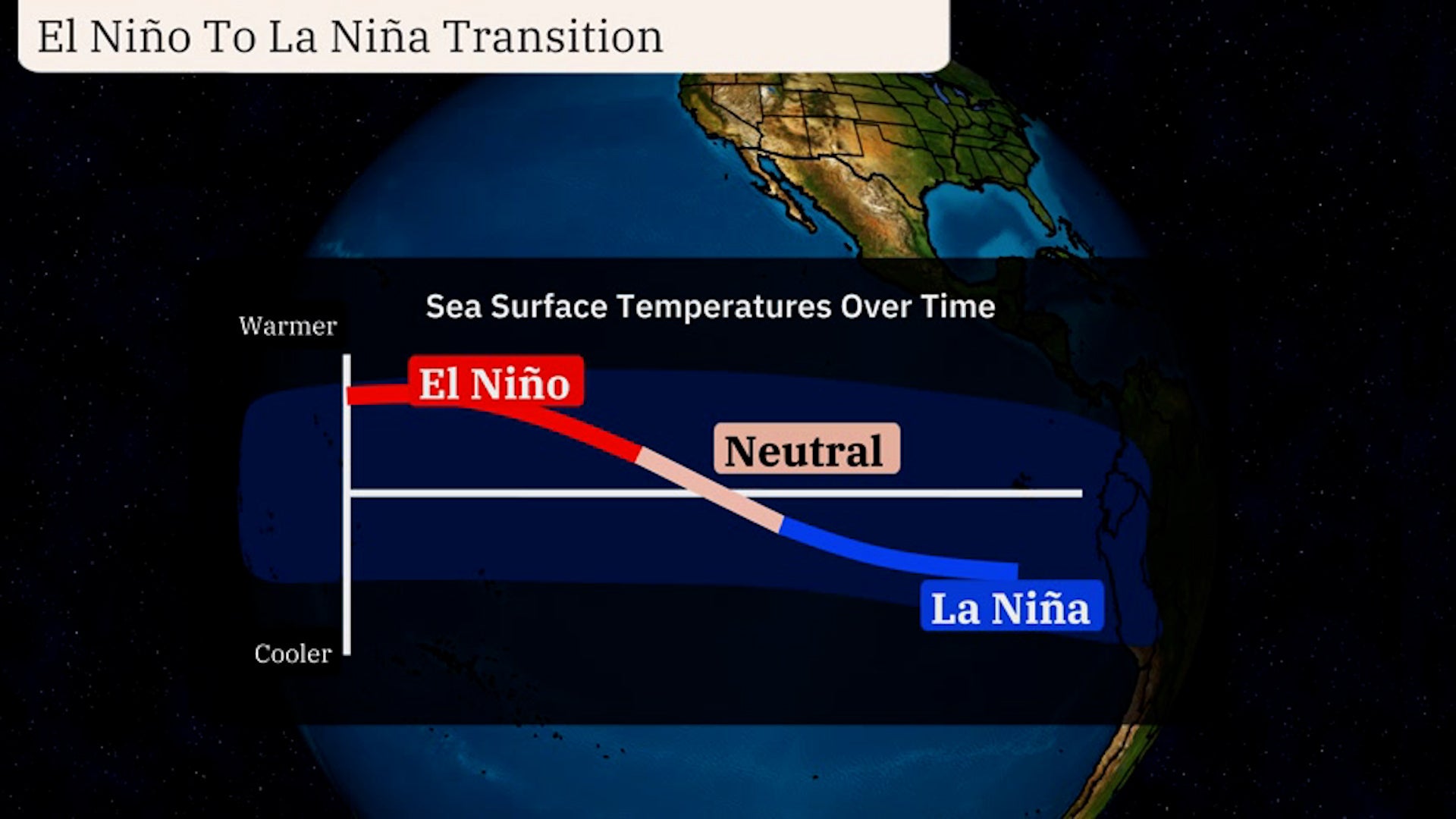
The equatorial waters of the Eastern Pacific off the coast of South America have steadily warmed during March, and it appears increasingly likely that the current La Niña event will be over by June. This week, sea surface temperatures (SSTs) over the tropical Eastern Pacific in the area 5°N - 5°S, 120°W - 170°W, also called the "Niña 3.4 region", warmed to 0.8°C below average, according to NOAA. This puts the current La Niña in the "weak" category for the first time since the event began in July 2010. If these SSTs continue to warm such that they are no more than 0.5°C below average, the La Niña event will be over, and we will be in "neutral" conditions. An animation of SSTs since late November shows this developing warmth nicely. Springtime is the most common time for a La Niña event to end; since 1950, half of all La Niñas ended in March, April, or May. The weakness displayed by the current La Niña event has prompted NOAA's Climate Prediction Center to predict that La Niña will be gone by June. As La Niña continues to wane, we can expect that rainfall over the drought regions of the southern U.S. will gradually return to normal levels by mid-summer.

Figure 1. Latest runs of the long-range El Niño models have 5 predictions for La Niña conditions during hurricane season, 7 for neutral conditions, and 5 for El Niño. Image credit: IRI.
Impact on hurricane season
It is well-known that when an El Niño event is in place, a significant reduction in Atlantic hurricane activity results due to an increase in wind shear. With La Niña likely gone by June, what are the chances of having El Niño in place by the August-September-October peak of hurricane season? Well, our long-range El Niño models do a poor job of making accurate predictions in the spring, a phenomena known as the "spring predictability barrier." True to form, the March predictions by these models are all over the place (Figure 1.) There are 5 predictions for La Niña conditions being present during the upcoming hurricane season, 7 predictions for neutral conditions, and 5 predictions for El Niño. If we look at past history, since 1950, there have been six La Niña events that ended in the spring. During the subsequent hurricane season, two of those years experienced El Niño conditions: 1951 (10 named storms, 8 hurricanes, and 5 intense hurricanes) and 1976 (10 named storms, 6 hurricanes, and 2 intense hurricanes.) The other four years had neutral conditions during hurricane season. These years were 1968 (8 named storms, 5 hurricanes, 0 intense hurricanes), 1989 (11 named storms, 7 hurricanes, 2 intense hurricanes); 1996 (13 named storms, 9 hurricanes, 6 intense hurricanes); and 2008 (16 named storms, 9 hurricanes, and 5 intense hurricanes.) An average hurricane season has 10 named storms, 6 hurricanes, and 2 intense hurricanes. So, three of these six analogue years had five or more intense hurricanes (including one of the El Niño years). Looking at sea surface temperature in the hurricane main development region (MDR), the stretch of ocean between the coast of Africa and Central America, including the Caribbean, February temperatures this year were 0.62°C above average, the 7th highest February anomaly since the late 1800s. Of the six analogue years since 1950 when La Niña ended in spring, only 1996 had a much above average February SST anomaly in the MDR (0.61°C.) Thus, I believe it is a reasonable speculation at this point to predict this year's hurricane season will be similar to 1996, with its 13 named storms, 9 hurricanes, and 6 intense hurricanes--assuming we end up with neutral and not El Niño conditions this fall.

Figure 2. Departure of temperature from average for February 2011. Image credit: National Climatic Data Center (NCDC).
February 2011: 14th - 17th warmest on record for the globe
February 2011 was the globe's 17th warmest February on record, according to the National Oceanic and Atmospheric Administration (NOAA) National Climatic Data Center (NCDC). NASA's Goddard Institute for Space Studies rated February the 14th warmest on record. February 2011 global ocean temperatures were the 10th warmest on record, and land temperatures were the 28th warmest on record. Global satellite-measured temperatures for the lowest 8 km of the atmosphere were average, the 14th or 17th coolest in the 34-year record, according to Remote Sensing Systems and the University of Alabama Huntsville (UAH). The global cool-down from November, which was the warmest November on record for the globe, was due in large part to the moderate strength La Niña episode in the Eastern Pacific. The large amount of cold water that upwells to the surface during a La Niña typically causes a substantial cool-down in global temperatures. The coldest places on the globe in February, relative to average, were Eastern Europe and northeastern Siberia. Central Africa, central China, and western Greenland were exceptionally warm. For the contiguous U.S., February temperatures were near average, ranking the 51st coldest in the 117-year record, according to the National Climatic Data Center. Precipitation was also near average, ranking as the 41st driest February since 1895. February 2011 Northern Hemisphere sea ice extent was tied for the lowest on record in February, according to the National Snow and Ice Data Center. Satellite records extend back to 1979. This is the third consecutive month of record low Arctic sea ice cover.
Mostly offshore winds expected over Japan through Thursday
Radioactive plumes emitted from Japan's troubled Fukushima nuclear power plant will mostly head to the south today, passing just east of Tokyo. Northerly winds wrapping around the back side of an area of low pressure moving out to sea to the east are responsible for this pattern. As high pressure builds in over the next few days, mostly offshore winds will carry radiation from the Fukushima plant out to sea. This should change on Friday, when an approaching low pressure system will once again bring northeasterly onshore winds to Japan, possibly blowing heightened levels of radioactivity into Tokyo.

Figure 3. One-day forecast movement of plumes of radioactive air emitted at 10 meters altitude (red line) and 100 meters (blue line) at 18 UTC (2pm EDT) Tuesday, March 22, 2011 from the Fukushima Daiichi nuclear plant. Mostly offshore winds are predicted to keep the plumes east of Tokyo. Image created using NOAA's HYSPLIT trajectory model.

Figure 4. One-day forecast movement of plumes of radioactive air emitted at 10 meters altitude (red line) and 100 meters (blue line) at 18 UTC (2pm EDT) Wednesday, March 23, 2011 from the Fukushima Daiichi nuclear plant. Offshore winds are predicted to carry radioactivity away from Japan. Image created using NOAA's HYSPLIT trajectory model.
Resources
The Miami Herald has an interesting article discussing how Japan's earthquake caused a 3-inch jump in ground water levels in South Florida 34 minutes after the quake struck on March 11.
Seven-day weather forecast for Sendai near the Fukushima nuclear plant
The Austrian Weather Service is running trajectory models for Japan.
Spring is here, and wunderground has set up an eCard to send messages to friends and family celebrating the arrival of spring.
My next post will probably be on Thursday.
Jeff Masters
Reader Comments
Page: 1 | 2 | 3 | 4 | 5 | 6 | 7 | 8 | 9 | 10 | 11 | 12 | 13 | 14 | 15 | 16 | 17 | 18 | 19 — Blog Index
Then you'll get a Free Group HUG.
LOL
well you got a point
LOL :)
Here I go getting off on a tangent but, I think most people understand this. I think what most people do not like is that corporations put profit about people each and every day. I realize corporations are not charities, but when they knowingly harm people all for the sake of profit, that is when a majority of us will stand up and say something. I for one have a lot of money in the stock market through my IRA and small investment account. I have talked with my financial advisor about socially responsible investing and try to only invest in companies that are responsible. It is a tough task indeed. I do not think corporations are evil, but many who run them are. Also, let us remember that while little people like me own tiny fractions of these corporations, the majority are held by the wealthiest of the wealthy. They control everything, and the little people always get a raw deal.
I am sorry for going off of the topic.
You can easily say it is a collective greed but we leave the argument if greed is noble or evil. (or just human nature.) The big problem lies when decision makers of corporations choose profit over the safety and well-being of the people at large.
It is 81 and beautiful out at sunset.
As Dr. M mentioned, in the spring, ENSO forecasts basically stink. We don't fully understand what drives the ENSO cycle, so the models can't predict it very well when its in transition. That said, I don't look at individual models, but more at the general direction they are going (the consensus or average). I also look for several models grouping together around a general solution for an idea of whats being predicted.
Also, I will point out that the models accurately predicted (well, the consensus did) both the formation of this La Nina, and also the waning of this La Nina.
Now, if u r going to advertise in this blog, this is the way to do it.... lol....
But SERIOUSLY.... there is some very useful information here for those of us in the tropical / sub-tropical zone. I don't think pple in our area understand the value of roof insulation in reducing cooling bills during the summer....
I'm confused... if I own stock in a company I'm not allowed to complain when I feel that the company is being socially irresponsible?
Hey Baha, Couldn't agree more. What's your predictions for this season? And Bahamas and Treasure Coast specifically.
r u going to run the contest again this year? Pple r already putting up forecasts....
One item I will point out... yes, shareholders are technically the American public. In reality, outside your 401(k)s and IRAs, how many individual shares are actually owned by the American public? And of those shareholders, how many are outside of the top 10% of annual income?
Also, I will note that IRAs, 401(k)s and mutual funds, by their very nature, preclude the average fund-holder from having a say in the operations of any company in which the fund holds stock.
You can complain, sure.
Will it be realistically possible to find the right party at the company to complain to?
Probably not, unless you are either unemployed or retired.
Will the company give you any more attention than they do the cockroach they just ran over on the freeway?
Probably not.
Tropical Disturbance Summary
TROPICAL DEPRESSION 13F
9:00 AM FST March 23 2011
===========================================
At 21:00 PM UTC, Tropical Depression 13F (1003 hPa) located at 17.2S 176.8W is reported as moving west southwest at 10 knots.
Organization has improved in the past 24 hours. The degree of convection has increased and the cloud top temperature has significantly cooled in the past 12-24 hours. System lies under an upper level ridge in a low shear environment. Sea surface temperature is around 30C.
Global models are developing the system while adopting a southwesterly track.
Potential for this system to develop into a tropical cyclone within the next 24-48 hours is MODERATE TO HIGH.
An interesting question, but I think if you review the comment log you'll find that I did not complain, so I'm not the best person to give you an answer. My comment was simply a question posed in response to comment 150.
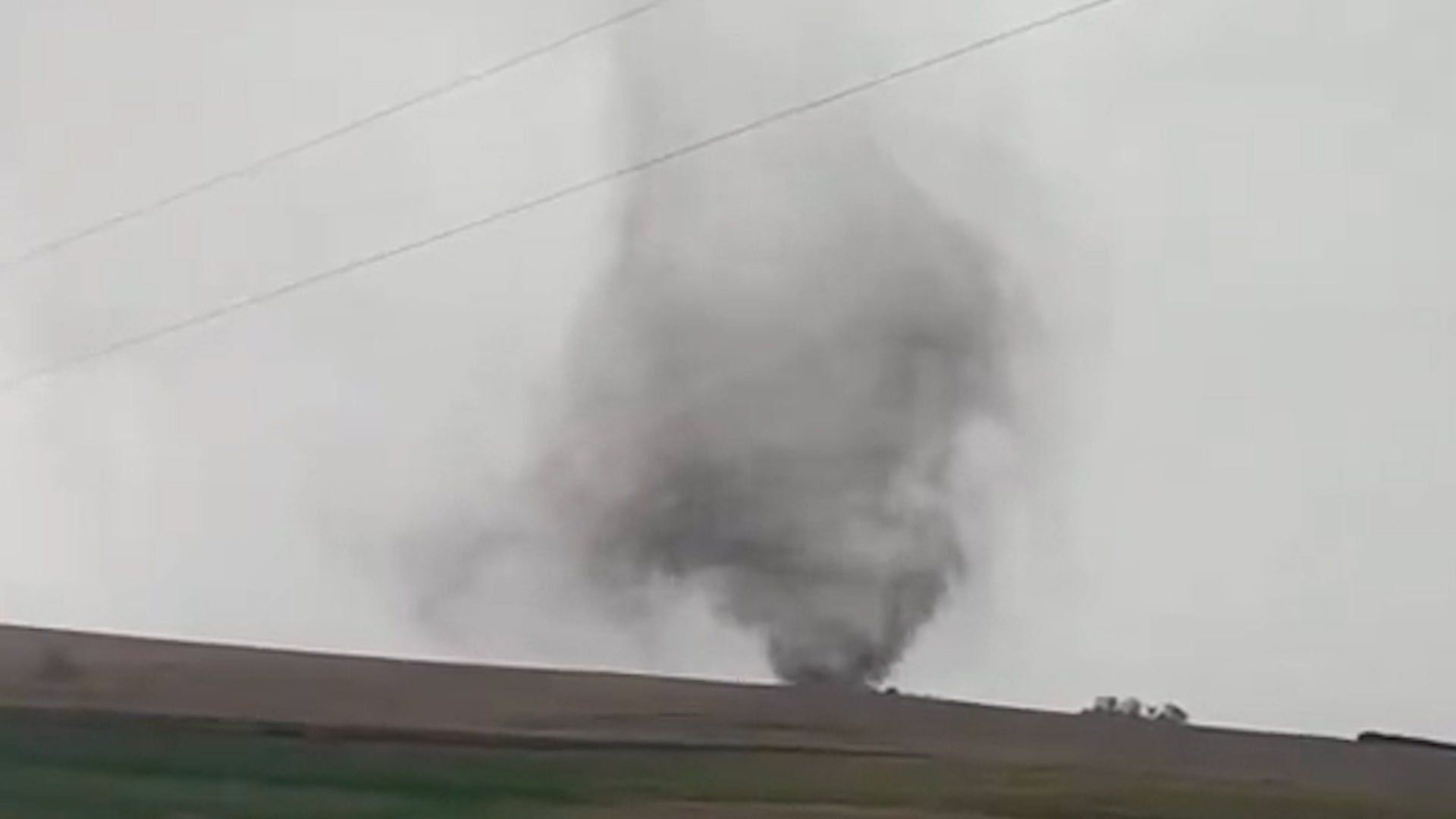
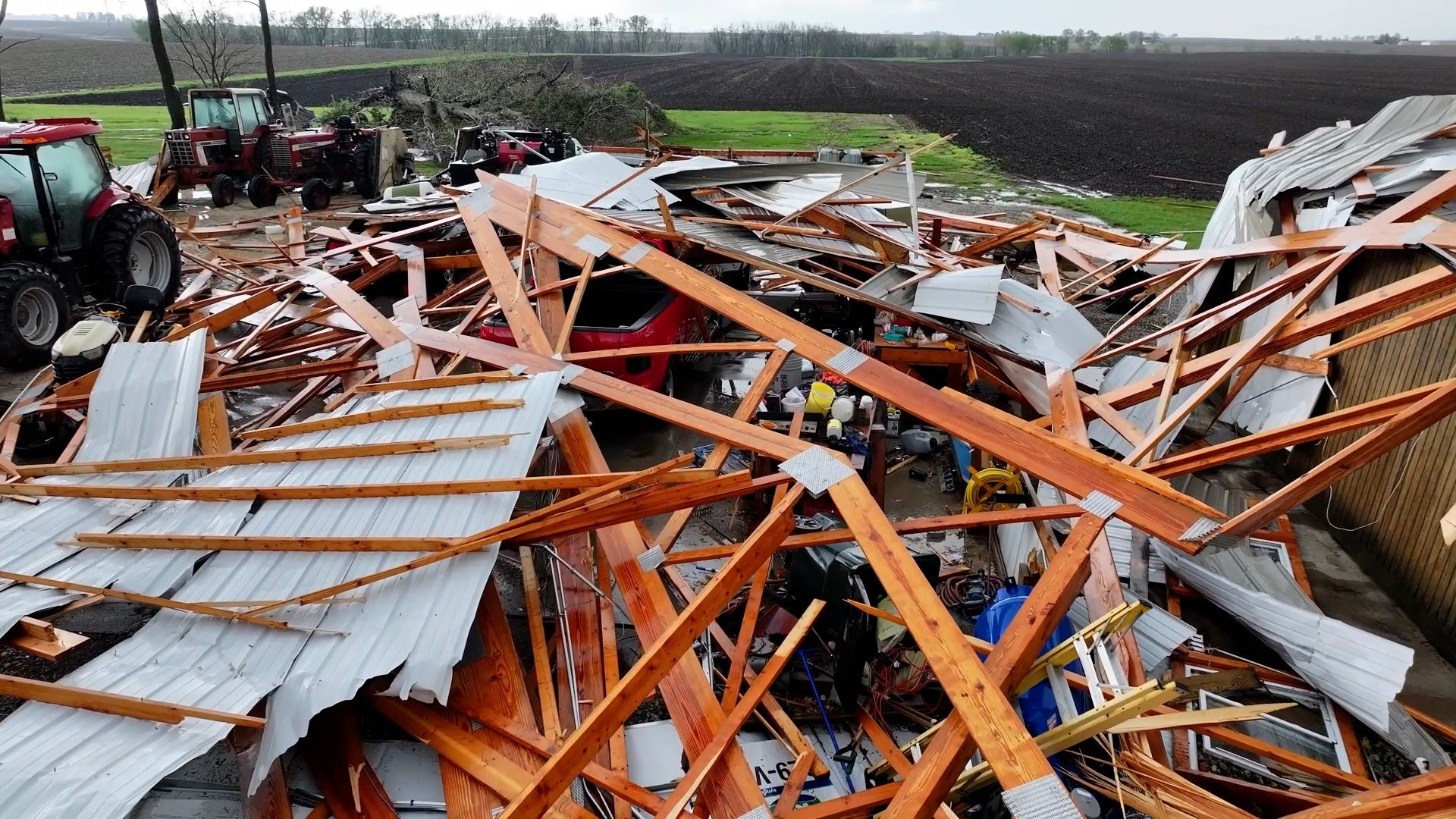
*AT 624 PM CDT...EMERGENCY MANAGEMENT REPORTED A TORNADO 6 MILES
NORTHWEST OF WINTERSET...OR 27 MILES SOUTHWEST OF DES MOINES.
DOPPLER RADAR SHOWED THIS TORNADO MOVING NORTHEAST AT 35 MPH.
Only board of directors hold power, and they do what's in their best interest which is namely to increase profits every year, even if that means to lay off 99% of the workers so they can increase their earnings by 1%. Corporations are shortsighted and disloyal by their very nature and the pressure is on to move in that direction. It would be nice if companies offered permanent tenure and pensions to their best workers, instead of the opposite, then people would be fighting to do a good job at work and stay loyal to the company, but today there is no particular self-interest in doing so.
My sister was laid off from a large bank in 2008. She had worked there for 36 years. She was laid off and given no severance at all. Companies do not care about their employees, even if those employees have dedicated their lives to the success of the company.
Article...
Yes, I understand that numerous pro-nuclear types will respond to this by stating that the radiation is harmless, it's lower than the everyday background stuff, it's harmless, it may even be beneficial, and blah, blah, blah. Please note that neither I nor the article are stating otherwise. I'm merely quoting an article from a Japanese news service.
Article...
Yes, I realize that someone will be along shortly to tell us that the silly Japanese health ministry is typically overreacting, that a person would have to eat 500 tons of irradiated spinach a day for 25,000 years to get as much radiation as a person spending 10 minutes at the beach without a shirt, that radiation is a wonderful and harmless byproduct of the super-duper ultra-safe never-harm-a-fly nuclear industry. I just wanted to share the story.
14-16 this season sounds very reasonable. I'm leaning on the higher end, 16-17 though.
Tornado signatures look very impressive on radar, this could prove really bad.
(Lest JF show up, or something, no, not siding with anything nor anyone, here.)
Sez who?
I got Citations for all of them.
A citation for Loitering, one for Stupidity, and one for Irrelevance.
you have to have good long-term memory recall, to follow this conversation...
No. The articles are not my words, of course, and people are free to read (or not) my disclaimers. The fact is, just about every mention of radioactivity in the past week here has been answered immediately with a dissertation on how safe nuclear energy really is and/or how everyone is blowing things out of proportion and/or how we've nothing to worry about because no amount of radiation is truly unsafe. I'm merely proactively acknowledging such attempts at spin.
Then again, I have been known to be snippy at times... ;-)
This should show all the pro nuclear people that if we had a nuclear disaster with a larger radiation release, the entire hemisphere (n/s wise) would be effected.
How could you be willing to endanger the lives of all living things just to save some money?
I really don't understand the pro nuclear folk. Solar, wind, geothermal, and hydroelectric are all CLEARLY better options. Lives are worth far more than money ever was or will be.
I disagree. It's much easier to read. You can use it to you know. Idk why you are complaining.
I can use it to what, exactly?
I'm thinking more in the lines of 16 Named Storms, 10 Hurricanes, 6 Intense Hurricanes... And teddy hopefully those Ike like storms wont be back for more, really dont enjoy the big red target on our back even though it just might. what we do indeed need is a tropical storm to relieve the drought...
My landfalling guidelines:
FL, LA, TX, North Mexico, Cuba, Hispanoila, Central/Northern Virgin/Leeward Is., and the Carolinas.
What did you mean by "the repetitive [snip]"?
Exposure is not good beyond our natural environment to our knowledge. Yep, there are studies that show this and that with respect to potential exposure mitigating other negative influences on health, but exposure is not good in general, period.
Now, why the exposure is in existence is what I question. Would a newer plant be in the same condition as the 40 year old plant there, or perhaps in the US?
Probably not, but prohibiting any new construction of such, puts us at higher risk of failures as we move forward. Look at the vintage of that of which we prohibit to be replaced and that we absolutely rely on daily. Just like oil, we don't really have a choice. Truncating the subject at this point of the post.
Face it, there are no real viable options, aside from the other dirty ones we all discuss, all the time, that can substitute for the energy you need to live as a most folks who visit this blog do "right now".
So tell us the solution and make it stand on its own legs, Please!
What's on your mind?
We are the society of information, right?
Yea, Whatever!!!!! lol
poe-tay-toe
toe-mah-toe
who said we should keep those 40 yr old plants?
the solution would be a combination of solar, wind, and geothermal.
its more expensive but it won't kill us like nuclear can
Really?
That's a Good Post.
Until 'we' come up with viable options to Nuke plants, we need to build some new, improved ones, and take the old ones out of commission.
Evening everyone!
Yes, these Plants are potentially dangerous, and there have been issues with some of them. But this one is a pretty good example of what they can withstand, and updated systems in more 'stable' environments can surely make them safer.
The question is, unfortunately, 'do we have any choice right now?'
Cool, Huh??
I just patented the concept.
So what is your deduction for an alternative to nuclear energy? Nuclear energy powers the Universe, it will become the energy of the future. Even more so when scientists make a break through and initiate a self sustaining fusion reaction.
Its a dangerous world, get used to it...
With great power comes great responsibility, that also applies to more powerful modern energy sources. We just need to learn from these mistakes and commit to making better safe guards at Nuclear plants.
Viewing: 151 - 201
Page: 1 | 2 | 3 | 4 | 5 | 6 | 7 | 8 | 9 | 10 | 11 | 12 | 13 | 14 | 15 | 16 | 17 | 18 | 19 — Blog Index